Sewing a New Life from the Remnants of Grief
Sometimes, life unravels when we least expect it. For Mrs. Santosh Devi Kansara, that moment came with the sudden, quiet departure of her husband, the late Mr. Rameshchandra Kansara. In an instant, the world she knew was gone, replaced by the heavy, suffocating silence of grief and the terrifying weight of a family’s future resting entirely on her shoulders.
Loss is never just emotional, it is physical. It is the empty chair at the table and the dwindling coins in a jar. Santosh found herself standing at a crossroads where many might have surrendered to the shadows of limited means and social isolation. But she chose a different path one paved with a quiet, stubborn hope.
In 2017, a small window of opportunity opened. Through the Sakhi Project (supported by Hindustan Zinc and the Manjari Foundation), Santosh joined the Khatu Shyam Self-Help Group. It wasn't just a financial collective, it was a lifeline. For the first time, she wasn't alone in her struggle.
She sat among other women, learning the language of savings and the discipline of building for tomorrow.
Slowly, the fear in her heart was replaced by a sense of purpose. Today, she looks at her savings of ₹21,400 not just as a number, but as a mountain she climbed with one rupee at a time. It is the physical proof that she is no longer a victim of her circumstances.
Progress for Santosh wasn't a straight line. It took courage to borrow, and even more discipline to repay. Over the years, she took 12 different loans totalling over two lakh rupees. But these weren't for comforts or luxuries. Every penny was a seed planted in the soil of her family's future.
Every loan was repaid with the kind of honesty that only someone who has known true hardship can possess.
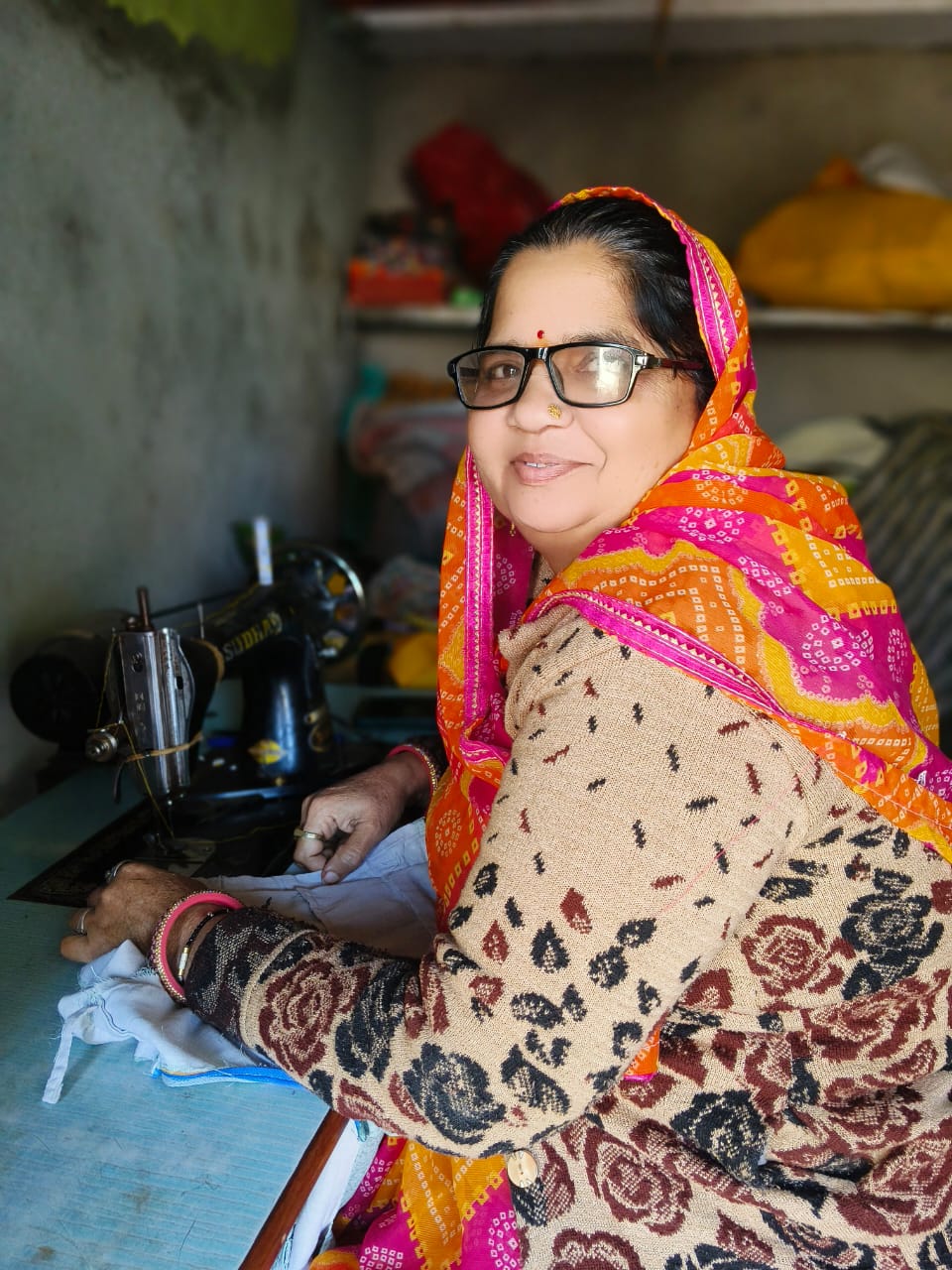
The real turning point came when she sat behind a sewing machine. As she learned to stitch, she realised she was doing more than joining pieces of fabric, she was mending her own life. She vowed then that her days of dependency were over.
She saved until she could buy her first machine.
Then, through the long nights of labour and the growing trust of her neighbours, she added fall machines to her workspace.
Today, Santosh Devi earns between ₹150 and ₹200 a day. To some, it may seem modest. To Santosh, it is a fortune. It is the price of her independence. It is the milk on the table, the books in her children's hands, and the ability to look the world in the eye with her head held high.
Her story is a gentle reminder to anyone sitting in the dark right now. Your struggle is not your identity. Santosh Devi Kansara didn't just survive, she bloomed. She proved that when a woman is given a little guidance and a lot of respect, she can change the trajectory of her entire world. She is no longer just a helpless widow who lost everything, she is a master tailor of her own destiny.