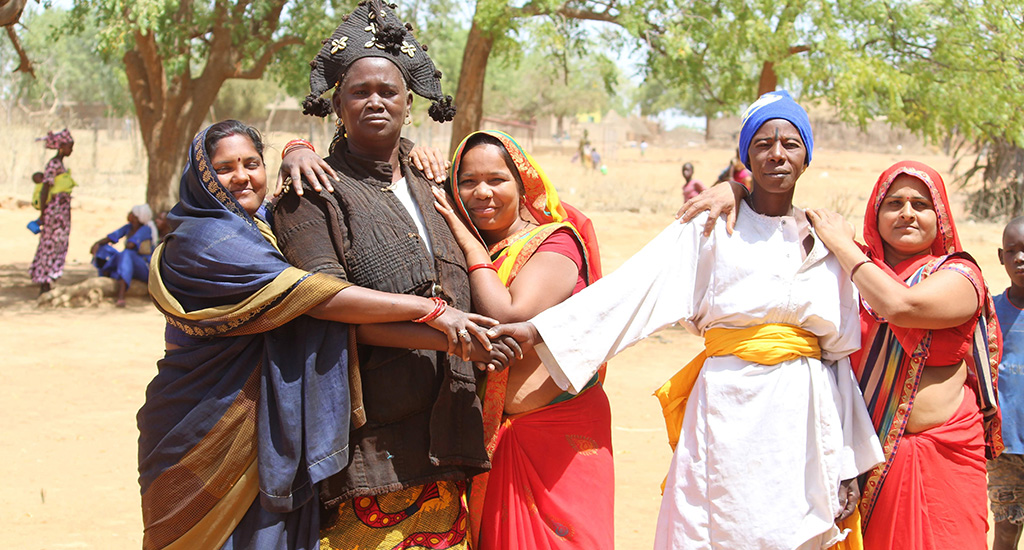
The Indo-Mali project represents a milestone achievement for the Manjari Foundation, successfully replicating our proven "Dholpur Model" of institution-building and livelihood advancement in Logo Kayes, Mali.
The foundation for this global initiative was laid in 2016, when a delegation of cross-organisational stakeholders from Camide and Virtue Ventures visited India. Their goal was to study Manjari's framework for women’s empowerment and rural economic development firsthand. Deeply impressed by the tangible, on-ground impact of our work, Camide invited the Manjari Foundation to co-execute Yeredme, a groundbreaking pilot initiative designed to pioneer women's empowerment in Mali.
The core objective of this strategic partnership was to test the adaptability of Manjari’s social transformation model, evaluating how localised Indian methodologies could be innovatively applied to solve complex socio-economic challenges within the West African context.
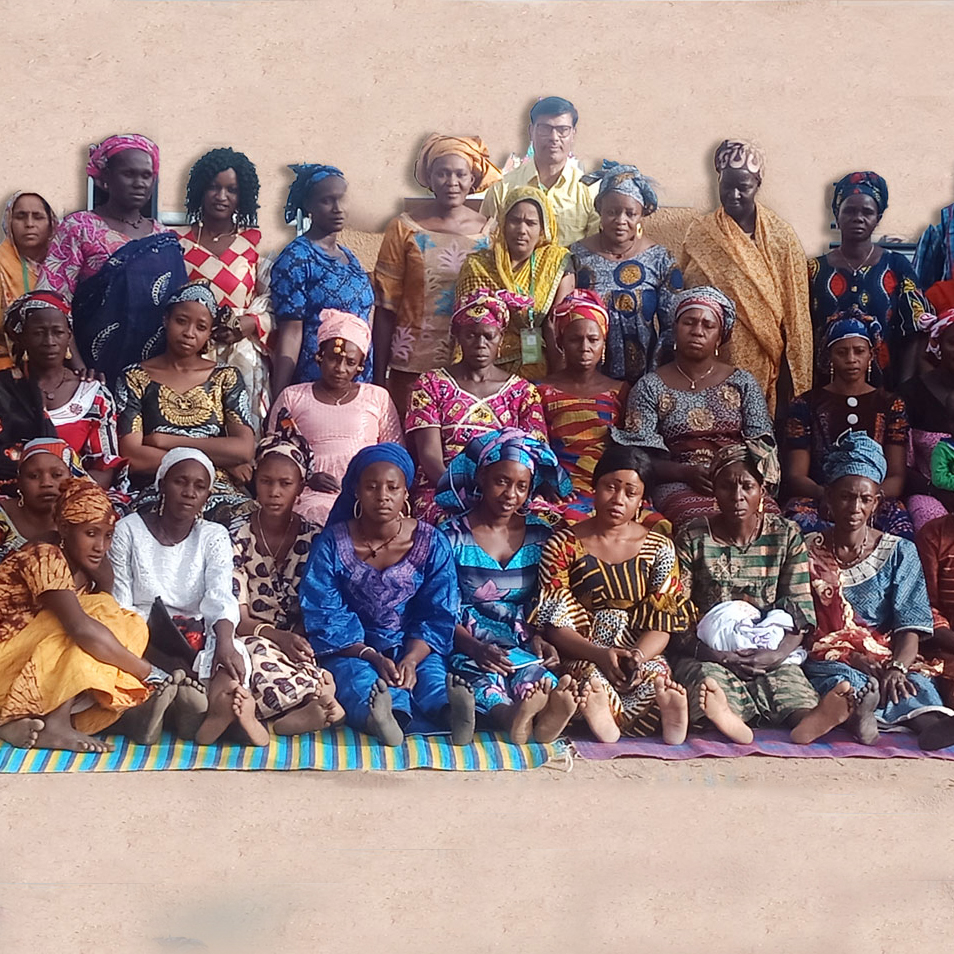
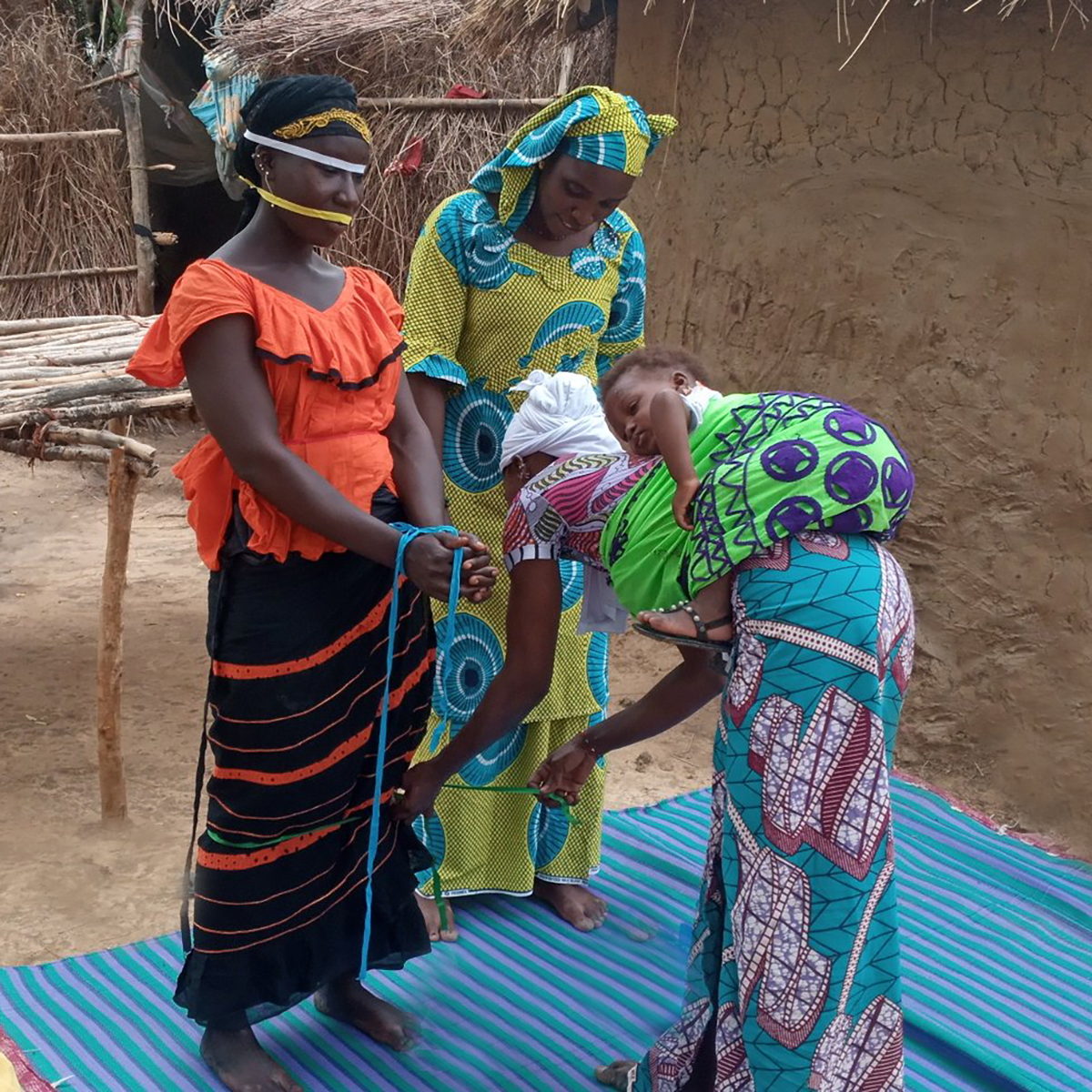
The journey began when a delegation from Mali visited India to experience the country’s powerful, peer-driven Self-Help Group (SHG) ecosystem. Witnessing how the Manjari Foundation seamlessly integrated SHG dynamics into sustainable livelihood agendas, the Camide team sought to replicate this unique model within the Kayes region of Mali.
To ensure a deep contextual understanding, a specialised Manjari team, comprising technical experts and seasoned SHG leaders, travelled to rural Mali a year later. This visit in 2017 marked the launch of a landmark South-South collaboration. By utilising an experiential, peer-to-peer learning and role-modelling methodology, the Indian women-led SHG framework was successfully adapted to the Malian landscape.
Today, this cross-continental partnership has organised more than12,000 women into 761 SHGs across 98 villages, culminating in a powerful regional federation driving localised change.
An interactive map of the current groups and villages is available at: http://go.camide.org/cartegydlogo
Our Testimonials
'Manjari’ literally translates to “seed of Tulsi”, a sacred Indian plant. When women mobilise themselves to form institutions, they are empowered to sow their own ‘seeds of change’.
"Development of Corporate Citizenship (DoCC), the social internship program of SPJIMR has been collaborating with Manjari Foundation since 2015. This has been fruitful relationship for us. I want to emphasise the four following themes. First the internships give our students a different idea of leadership which also gives them a sense of requirements for the future and adds to the ethics of sociological content. The participants acquire a notion of innovation- both social and technical which gives them a systemic view of the society. Such an empirical location gives them both a sense of limits and possibilities of what they can do. Environmental consciousness and gender sensitivity constitute two critical parts of social responsibility as we define it today. The participants of the internship understand what these key concepts mean in everyday sense. Internship at Manjari adds to their imagination in this direction. We value this relationship."

"Our collaboration with Manjari has allowed us to better understand the approach of solidarity groups and concretely towards the empowerment of women in the commune of Logo.The participation of Indian PRCs has been beneficial because the women have appropriated easily by seeing that they are rural women Indian women who share their experiences with them. The Camide team was formed by the professionals of Manjari with enthusiasm and professionalism and is able to reproduce most of the activities. This period of collaboration opens up prospects for our two structures to replicate the model in Mali and Africa. We again thank Manjari for all the efforts made for Camide and particularly the Director Sanjay Kumar. We were able to reach more than 2,500 women and more than 180 million CFA francs of credit granted four test henhouses substantial support for the winter and market gardening campaign in terms of results thank you."

"Without larger vision and dedication of the team of MF and its leadership, both vertical and horizontal growth would have never been possible to pick up at this level in this short history of its evolution. Since I have been associated with the Sakhi project of MF funded by Hindustan Zinc for the last 2 years, the happiness and confidence seen in their faces of hundreds of women in the villages proves its vitality. I have also witnessed the UN-women funded second chance education project (SCE) being implemented in 3 districts under the guidance of PRADAN is a much worthy to reach out to those young women in the age group of 16-35 who have been deprived in their childhood with the education, skills and employment are now happily enrolled and trained to overcome these deprivations with much positive outcome. While writing all these statements, I recall each visit to the project area to witness the change processes that were taking place within those women who had never dreamed of being so empowered and self-reliant so soon in their lifetimes."

"Manjari Foundation is IPE Global’s implementation partner in Dholpur, Rajasthan under the Children’s Investment Fund Foundation (CIFF), UK supported Project Udaan that aims at reducing teenage pregnancies. They have been instrumental in successfully piloting interventions for improving the knowledge of adolescents around sexual and reproductive health (SRH) in Bari block of Dholpur. Their efforts in organizing a team to take up the issue of adolescent SRH and facilitating its implementation with great sensitivity across the block has not only been recognized by the district administration, but has also paved way for attempting a scale-up across the district. Their coordination with the community-level institutions, local government bodies and the target group has been noteworthy and exemplary. "